Why We Made This:
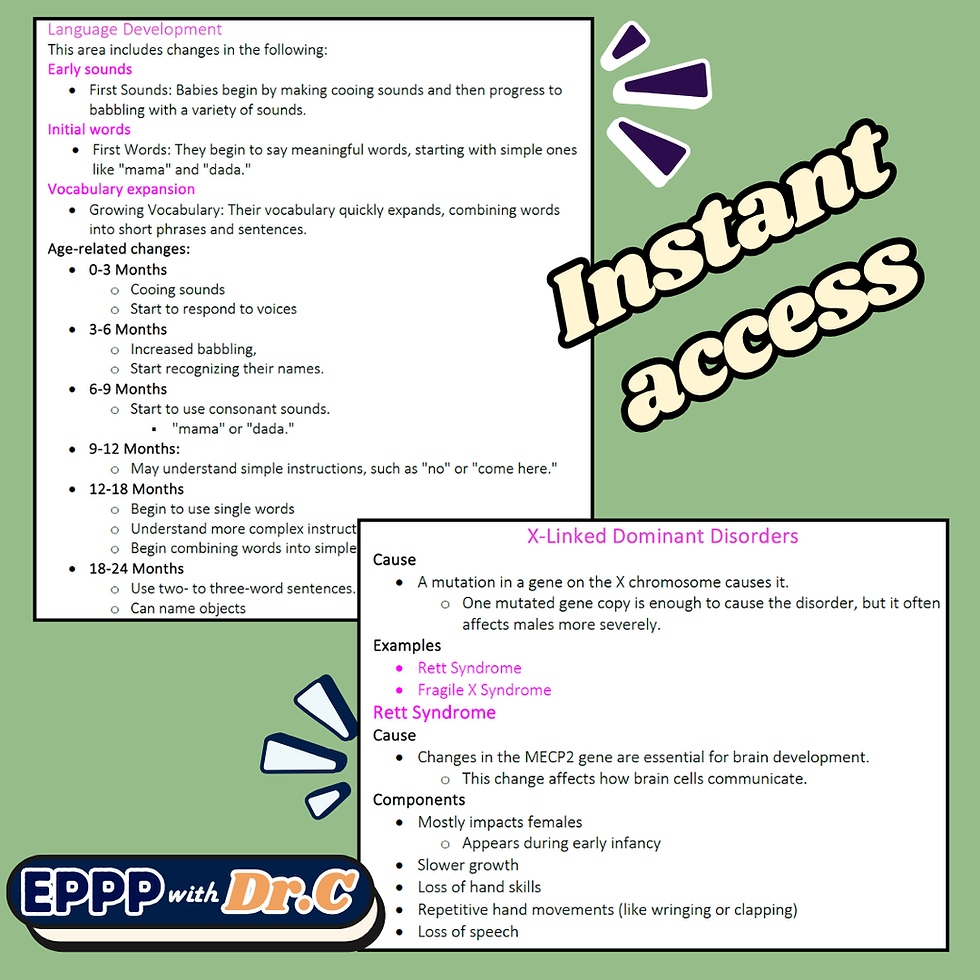
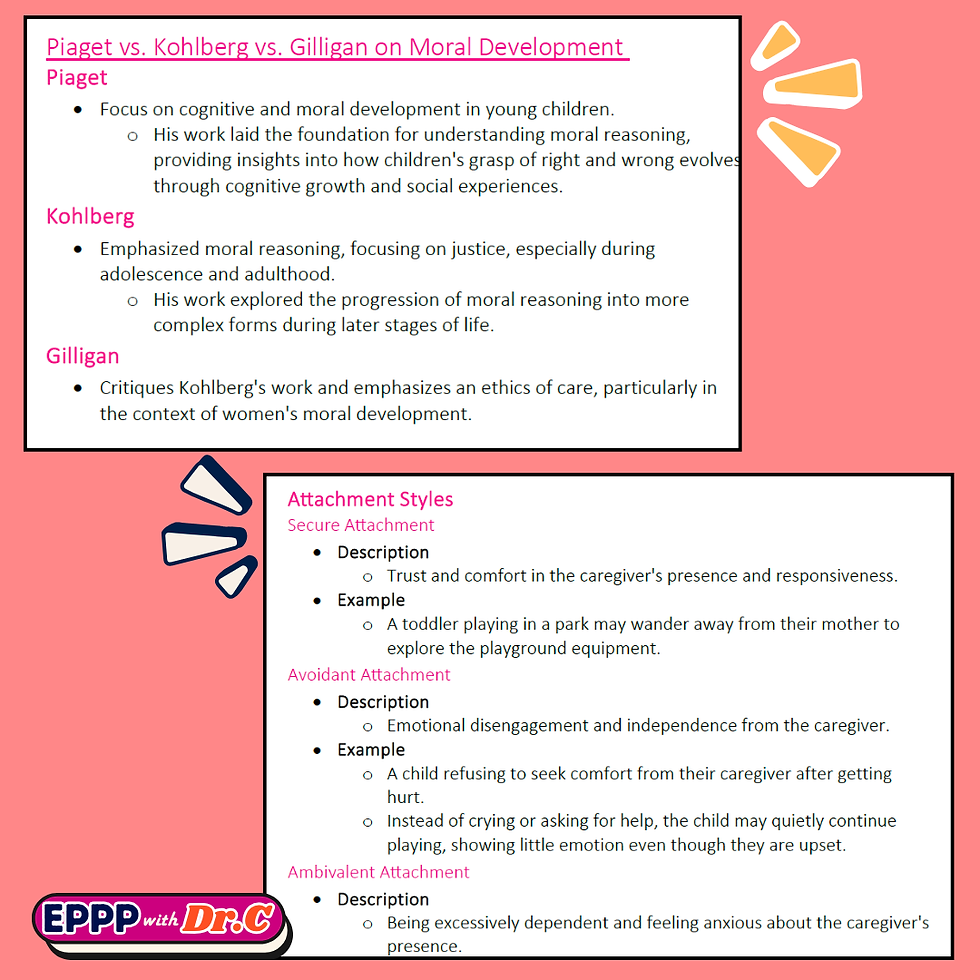
Human development is a foundational area of psychology, yet it’s often one of the most overwhelming. From Piaget’s stages of cognitive development to Freud’s psychosexual model and Erikson’s psychosocial theory, each approach uses different terms, focuses, and timelines. This can make it challenging to organize and recall the theories accurately—especially under the pressure of the EPPP. We created this PDF to provide clarity and a precise flow to these classic models. This PDF offers side-by-side comparisons, concrete examples, and simplified explanations, enabling individuals to understand, integrate, and apply these developmental theories with confidence.
Learning Objectives:
Describe Piaget’s stages of cognitive development and apply terms like assimilation, accommodation, and object permanence.
Differentiate between Piaget’s and Vygotsky’s approaches to cognitive development, including the zone of proximal development and scaffolding.
Explain each of Freud’s psychosexual stages, including fixation points and how early experiences may influence adult personality.
Identify Erikson’s eight psychosocial stages and the key developmental conflicts and virtues associated with each life period.
Distinguish between theoretical emphases (e.g., internal vs. external development, individual vs. cultural influence) across models.
Recognize age-specific developmental tasks and challenges across infancy, childhood, adolescence, and adulthood.
Understand key terms like magical thinking, egocentrism, seriation, reversibility, personal fable, and imaginary audience.